Japan is a hot spring powerhouse. There are about 2,900 various hot springs nationwide, meaning you can enjoy hot springs in most regions. However, there are some rules that must be followed when bathing. Be sure to follow these rules when you enjoy Japanese hot springs.
Culture
May 31. 2024
【Japanese Culture】Things to Remember When Enjoying Japanese Hot Springs
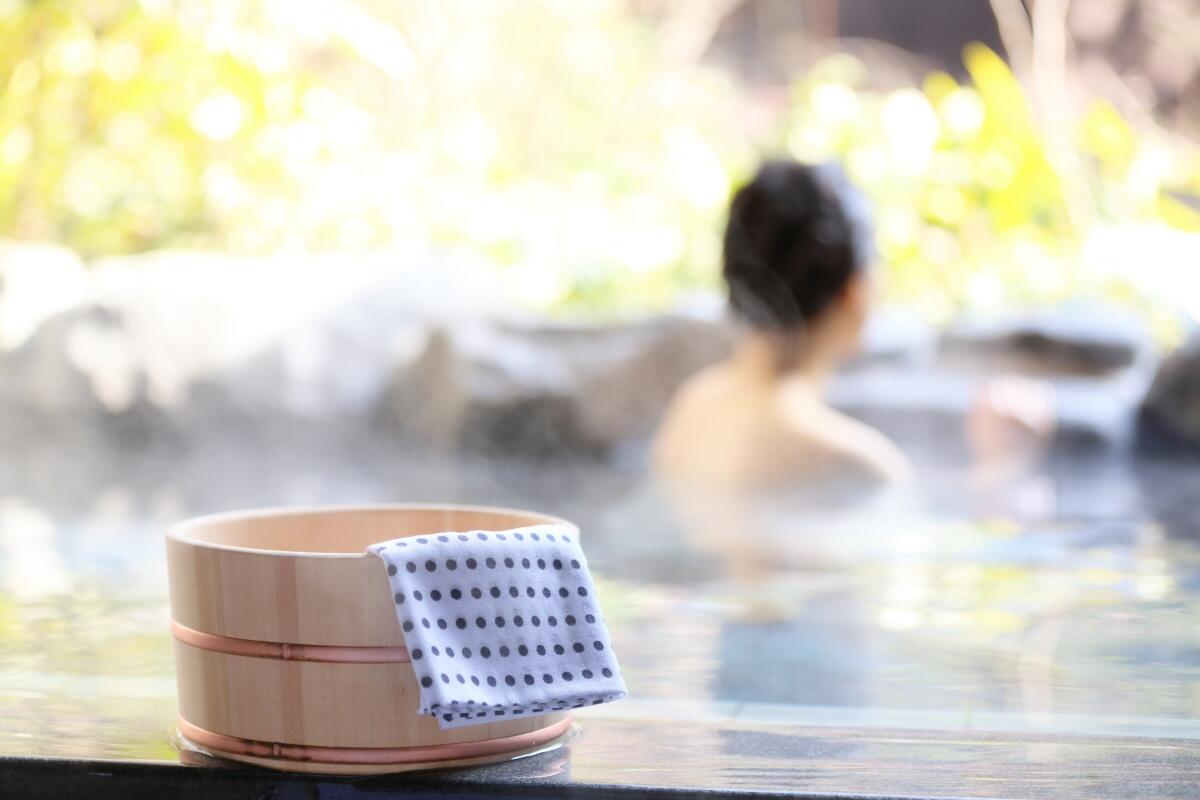
Japanese Hot Spring Culture

Since Japan is located in the fault zone and has many volcanoes, it has plenty of hot springs. According to the announcement by the Ministry of the Environment in 2022, there are about 2,900 hot spring resorts in Japan and about 28,000 hot springs in total, indicating that there are hot springs almost everywhere.
Japanese people tell of legends that gods and animals came to the hot springs to heal their wounds, and there are many records of Sengoku warlords going to hot springs for medical treatment. "Hot spring cure culture" (湯治文化 / Toji Bunka) was born out of this folklore.
"Hot spring cure (or Therapeutic Bathing)" refers to a spa therapy that usually lasts for more than a week. Hot springs are said to be effective against certain diseases depending on the chemical composition in the hot spring water. During the Edo period, hot springs began to become popular, and farmers used them to heal the tiredness of the year during the time when there was no farming work.
In the Meiji era, medical research confirmed the efficacy of hot springs, and the number of hot spring users increased further. Today, hot springs are synonymous with relaxation and leisure.
Types of Hot Springs in Japan
The color and smell of hot springs vary depending on the components of the hot spring water. The Japan Spa Association classifies Japanese hot springs into 10 types according to their chemical composition.
1.Simple Springs. Example: Gero Onsen (Gifu Prefecture)
2.Chloride Springs. Example: Atami Onsen (Shizuoka Prefecture)
3.Carbonated Springs. Example: Kawayu Onsen (Wakayama Prefecture)
4.Sulphate Springs. Example: Hoshi Onsen (Gunma Prefecture)
5.Carbon Dioxide Springs. Example: Hijiori Onsen (Yamagata Prefecture)
6.Ferruginous Springs. Example: Arima Onsen (Hyogo Prefecture)
7.Acidic Springs. Example: Tamagawa Onsen (Akita Prefecture)
8.Iodine-Containing Springs. Example: Maenohara Onsen (Tokyo Metropolis)
9.Sulphur Springs. Example: Nikko Yumoto Onsen (Tochigi Prefecture)
10.Radioactive Springs. Example: Misasa Onsen (Tottori Prefecture)
How to Enjoy Hot Springs
Many people choose to stay in hot spring resorts to enjoy hot springs. Since many of the hot springs in Japan are located in the mountains where transportation is inconvenient, if you visit a hot spring resort, why not stay overnight and take your time to relax and unwind? Most of the accommodations in a hot spring resort are traditional Japanese inns and luxury hotels, both of which can cost a lot of money. Originally, there would be very few restaurants open after sunset in hot spring towns, so many visitors would opt for a hotel plan that includes dinner and breakfast. Normally, this plan costs 10,000 yen or more per person, but the service is well worth the price.
If you prefer to sample the hot spring experience without staying overnight, we recommend the one-day hot spring. At one-day hot springs, you can use the hot spring facilities for about 500 to 1,000 yen at a time. However, there is a limit to the usage time, and not all inns accept day-trippers, so it is important to check the information in advance.
Recently, the number of hot spring facilities has increased in urban areas. More than just a mere hot spring, these mega baths are often laid out like one huge amusement facility, with hot springs available for an unlimited amount of time. There are often also restaurants, massages, magazines and manga corners, and a break room, so you can enjoy relaxing all day long. Admission to these facilities is a bargain 1,500 to 3,000 yen (meals are not included), making these facilities highly popular.
Cautions for using Hot Springs in Japan
The rules for bathing in hot springs are the same regardless of whether you are in a hot spring resort or a large hot spring amusement facility.
1.Please avoid bathing before and after meals, and immediately after drinking alcohol. If you take a bath before meals, eat a snack as to not bathe on an empty stomach.
2.The elderly, children, and those who need mobility assistance should avoid bathing alone. Do not run in slippery baths.
3.Wash your body thoroughly with body soap before taking a bath.
4.Check the temperature by testing a small amount of hot spring water on your skin before entering a bath.
5.Be quiet when entering and leaving the bath.
6.Please do not bring towels into the bath.
7.You do not need to rinse your body with water after bathing. (Except for sensitive skin)
8.Please rehydrate after bathing.
Can People with Tattoos Go to the Hot Springs?
The answer is yes, but you can't go to the public baths that many people share. Please use "private onsen bath rooms".
In Japan, there is no law that explicitly prohibits people with tattoos from bathing in hot springs, but the cultural stigma that only shady people get tattoos still remains in some places. In order to avoid troubles, some hot spring inns and hotels that have large communal baths have decided not to allow people with tattoos to enter these spaces.
Bathers with tattoos must rent a separate "private onsen bath room" where no one else other than your companions share the same space. By doing so, you will not be denied admission.
Tattoos are prohibited at large onsen amusement facilities, but as the number of foreign tourists and Japanese people with small fashion tattoos increases, more and more facilities are offering skin-colored body stickers that can hide tattoos so that anyone with small tattoos can still enjoy the hot springs.
About Unisex Hot Spring
Hot springs where both men and women can enter the same bath are known as mixed gender baths. This is a culture unique to Japan. There are facilities that still practice mixed bathing today, such as Sukayu Onsen in Aomori Prefecture, which has been in operation for roughly 300 years.
The decline of mixed bathing is said to be due not only to changing attitudes toward showing skin to the opposite sex, which is clearly prohibited by law, but also to an increase in the number of men, commonly known as “alligators,” who dive underwater and quietly approach women, making them feel uncomfortable. As a result, today, even though mixed bathing is practiced, most of them are used only by men.
In order to preserve the mixed bathing culture, some facilities, such as Aomori Prefecture's Sukayu Onsen and Furofushin Onsen, allow women to wear clothing provided by the facility.
Contents Source
This information is sourced by Fun Japan Communications Co., Ltd.
There may be business closures, changes to hours of operation,
or temporary suspension of the service of alcoholic beverages, etc.,
implemented without prior notice.
For details, please check the official websites or inquire with the
establishments directly.